Non-DAC Provider Transparency

Development cooperation is no longer the preserve of a small group of traditional donors. A much wider set of governments now finance projects, share technical expertise, provide humanitarian assistance, offer scholarships and take part in regional cooperation. The Center for Global Development’s 2023 mapping identified 54 countries outside the OECD Development Assistance Committee (DAC) with formal institutions for managing this work, and several are both providers and recipients of cooperation.
Transparency about this cooperation lets partner governments plan and coordinate, citizens and civil society scrutinise it, and providers learn across their portfolios. Without basic project and financial information, duplication is harder to spot, and results claims are harder to test.
This matters more as traditional aid shrinks: official development assistance from OECD members and associates fell a record 23.1% in real terms in 2025, to US$174.3 billion. Non-DAC providers are not a substitute, but they are an increasingly important part of the development landscape.
Making Impact Visible: Non-DAC Providers, Transparency and the Global Data Landscape
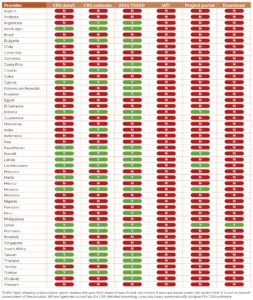
In October 2026, Publish What You Fund launched a new report assessing how 47 providers and their principal cooperation institutions make information public. It tests six channels:
- Detailed OECD Creditor Reporting System (CRS) data
- OECD estimates
- Actual 2024 Total Official Support for Sustainable Development (TOSSD) data
- Current International Aid Transparency Initiative (IATI) publication
- An official project portal
- A downloadable dataset.
The review is diagnostic and records whether each channel exists, not the quality of the data.
Our findings
The review finds a solid base to build on: 26 providers have actual 2024 TOSSD data, 16 report detailed data to the CRS, and 28 are visible through at least one international route. But this rarely translates into direct publication by the agencies themselves:
- No provider currently publishes to IATI.
- Only five (Estonia, Kuwait, Liechtenstein, Monaco and Qatar) run an official project portal, and only Qatar offers a downloadable dataset.
- 19 providers had no information through any of the six channels.
- Defensible annual figures exist for only 32 providers, totalling around US$10.83 billion, and in-kind cooperation is especially likely to be understated.
Our conclusion and recommendations
Most providers already have the data and capacity to report internationally. The next step is publishing directly at project level, so partner governments, civil society and affected communities can see what is delivered, where, with whom and with what results. As analysis increasingly relies on AI tools that draw on structured data, cooperation that is not visible in data risks being overlooked.
The timing is right. A Southern-led framework for measuring South–South cooperation, welcomed by the UN Statistical Commission in 2022, now recognises non-financial and non-monetised contributions, and TOSSD and IATI are adapting to match.
The review makes five recommendations for providers:
- Build familiarity with IATI and pilot publication for a selected portfolio, working with IATI’s South–South Cooperation Working Group.
- Strengthen activity-level international reporting, moving from estimates or aggregates to detailed CRS or actual TOSSD data.
- Develop an agency-specific project portal covering projects, partners, dates, sectors, status and results, including non-financial quantities where these better reflect the cooperation.
- Make project data available for bulk download in a structured format such as CSV or JSON.
- Apply a “publish once, use often” approach, drawing the portal, IATI publication and statistical returns from a single authoritative project register.
DOWNLOAD THE REPORT
Our Making Impact Visible series
This is the second in a series of four ‘Making Impact Visible’ reports that we will release over the next year.
Every two years, Publish What You Fund produces the Aid Transparency Index, which assesses the world’s leading aid and development finance organisations and provides a detailed and granular analysis of their transparency. However, the universe of organisations involved in delivering aid and development is far broader than those that can be included within the Index itself. This series, therefore, provides an opportunity to examine transparency across four important groups of actors in the aid and development delivery chain:
- UN agencies
- Non-DAC providers
- Major philanthropies
- Private aid contractors
Together, these reports will offer a consistent and comparable assessment of the quality, comprehensiveness, and timeliness of the information these organisations publish, helping stakeholders understand how visible their activities and impact are within the global development data landscape.